THE SCIENCE
The science behind sensitive skin and why what you put on it matters more than you think
If your child has eczema, you've probably been told it's genetic. And that's true but understanding why gives you a completely different way of thinking about how to care for it.
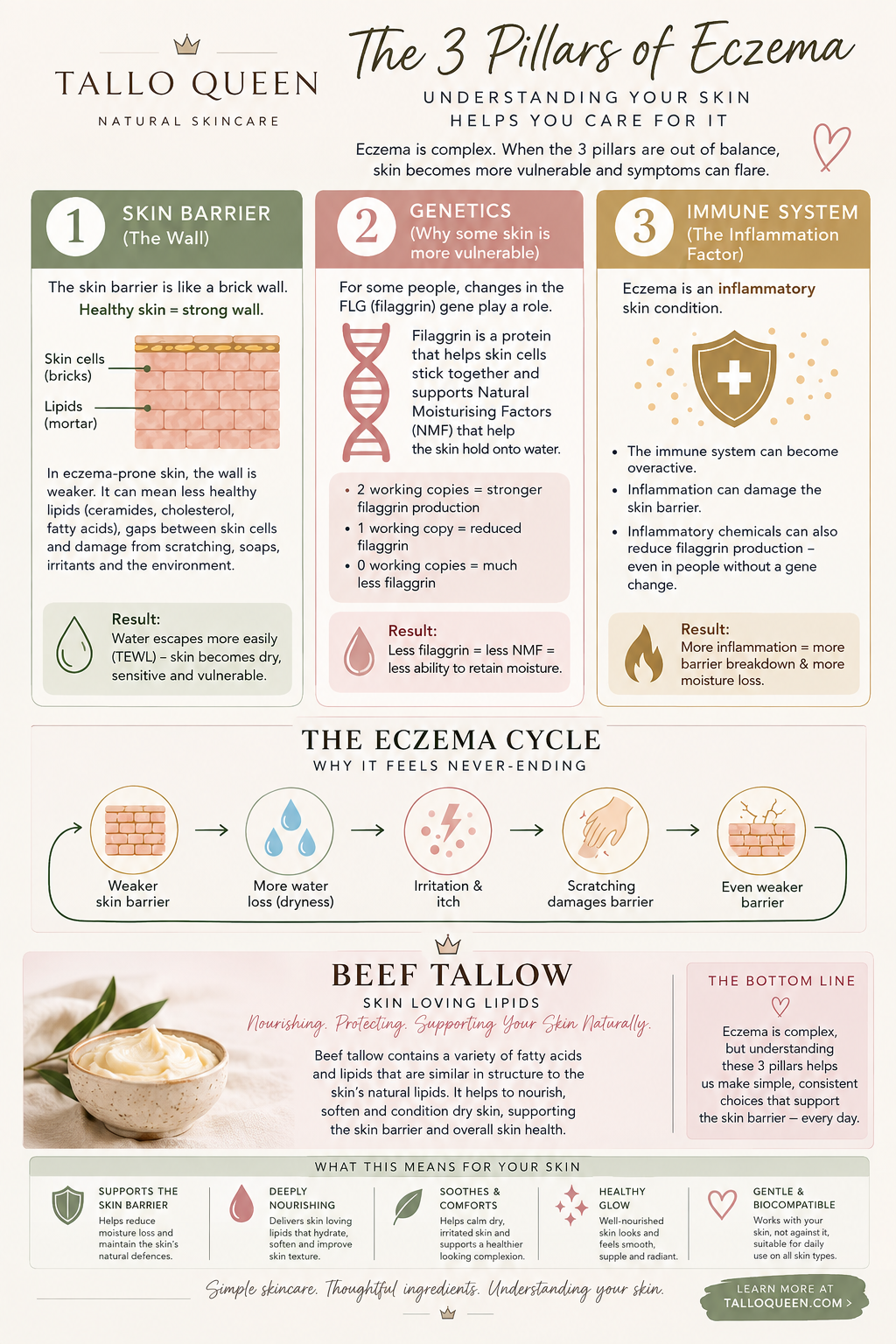
Eczema, or atopic dermatitis, is linked to a genetic difference in a protein called filaggrin. Filaggrin is produced in the outermost layer of the skin, where its job is to help maintain the skin barrier, the protective layer that keeps moisture locked in and everyday irritants out.
When filaggrin is reduced or absent, that barrier becomes compromised. The skin loses moisture faster than it should, becomes vulnerable to environmental irritants, allergens, and bacteria, and struggles to protect itself the way healthy skin does. The result is the cycle so many families know too well, dryness, redness, itching, inflammation, and flare-ups that just keep coming back.
What most conventional moisturisers do is sit on top of that compromised barrier and temporarily relieve the dryness. What they don't do is actually replenish the lipids, fatty acids, and fat-soluble vitamins the barrier is struggling to produce on its own.
That's where beef tallow changes the conversation.
Tallow is rich in the same fatty acids and fat-soluble vitamins A, D, E and K, that a healthy skin barrier relies on. It's one of the few moisturising ingredients that is structurally similar to the lipids already found in human skin, which means the skin can actually recognise and use it rather than just coating the surface. When you combine that with raw honey's natural soothing and antibacterial properties, you're not just moisturising compromised skin, you're giving it the building blocks it's genetically less able to make itself.
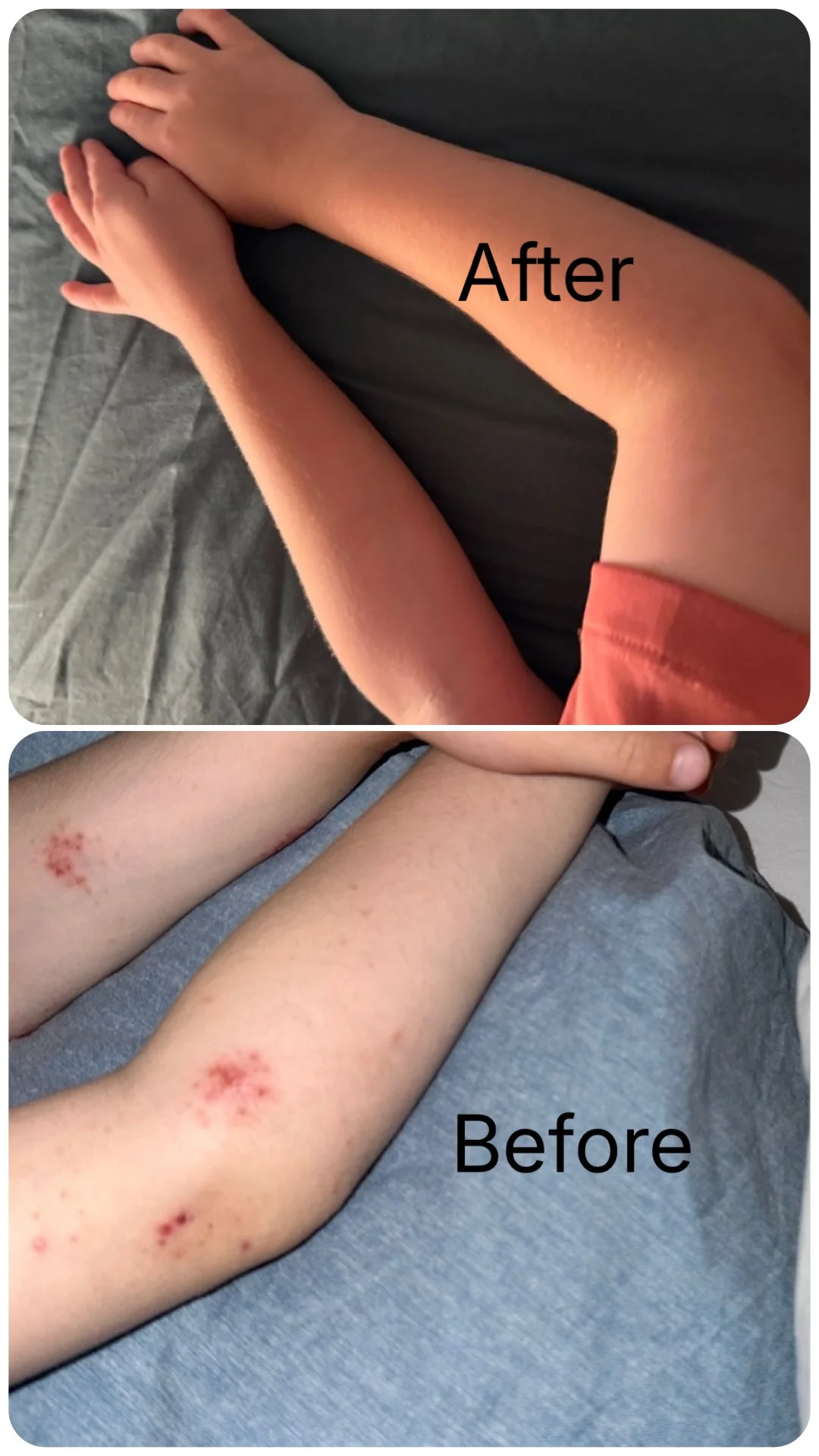
That's why I made this for my son and why he has enjoyed clear skin for the last 12 months.
-Sheridan, Registered Nurse and founder of Tallo Queen